
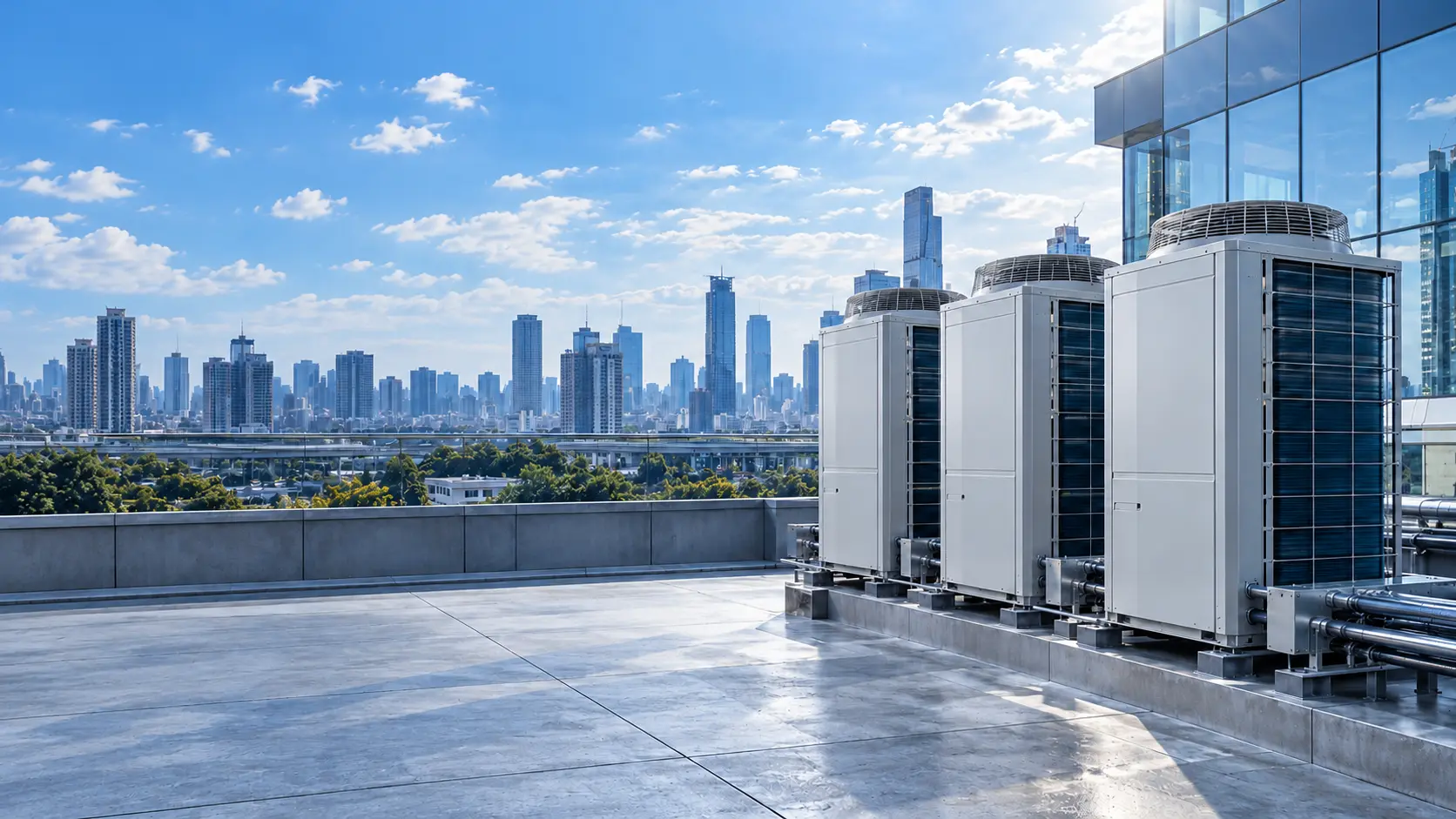
AIR VRV/VRF
Precise temperature control and up to 40% lower electricity costs* compared with other air conditioning systems
Win Win Supply (ESCO) provides VRV/VRF air conditioning for buildings and businesses, with an experienced team of refrigeration and air conditioning specialists ready to advise and design the right system for your building.
*Compared with other air conditioning systems. Actual results depend on how each building is used.
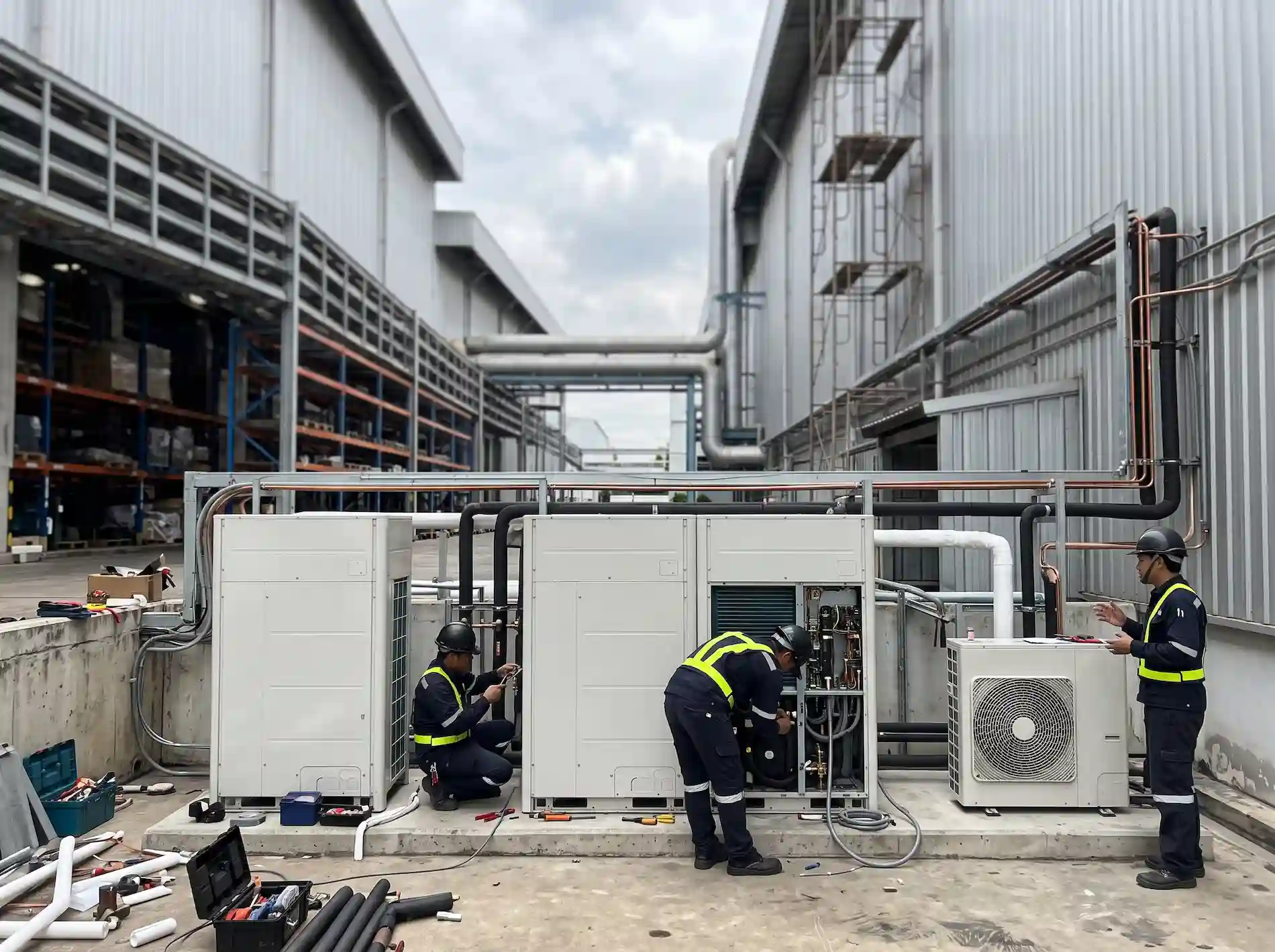



VRV/VRF systems explained
VRF (Variable Refrigerant Flow) and VRV (Variable Refrigerant Volume) are the same system under different manufacturers' names. It is a split air conditioning system where one outdoor unit connects to many indoor units. An inverter compressor adjusts its speed to actual demand, saving a great deal of energy. It is widely installed in buildings across Thailand, where most electricity goes to air conditioning.
Electricity savings
Save up to 40% on electricity compared with other air conditioning systems.
Outdoor to indoor
One outdoor unit connects to many indoor units, saving installation space.
Control options
From per-room remotes to smart control over a computer network.
Indoor unit types
Wall-mounted, ceiling-suspended, ceiling cassette, floor-standing and ducted, to suit any interior design.


Advantages of VRV/VRF for your building
VRV/VRF doesn't just cut electricity costs. It is easier to manage and fits building structures better than conventional air conditioning.
Precise temperature control, lower energy use
A refrigerant controller at each indoor coil keeps temperatures precise and saves up to 40% on electricity.
Better air quality
Built-in ventilation and dehumidification.
Per-room control or central control
Switch on/off and set the temperature of each room independently, or manage the whole building from one control room, with scheduling and user permission settings.
Flexible installation
Refrigerant piping can run much farther than in conventional systems, making it easy to place outdoor units. Fewer outdoor units save space and keep the building exterior tidy.
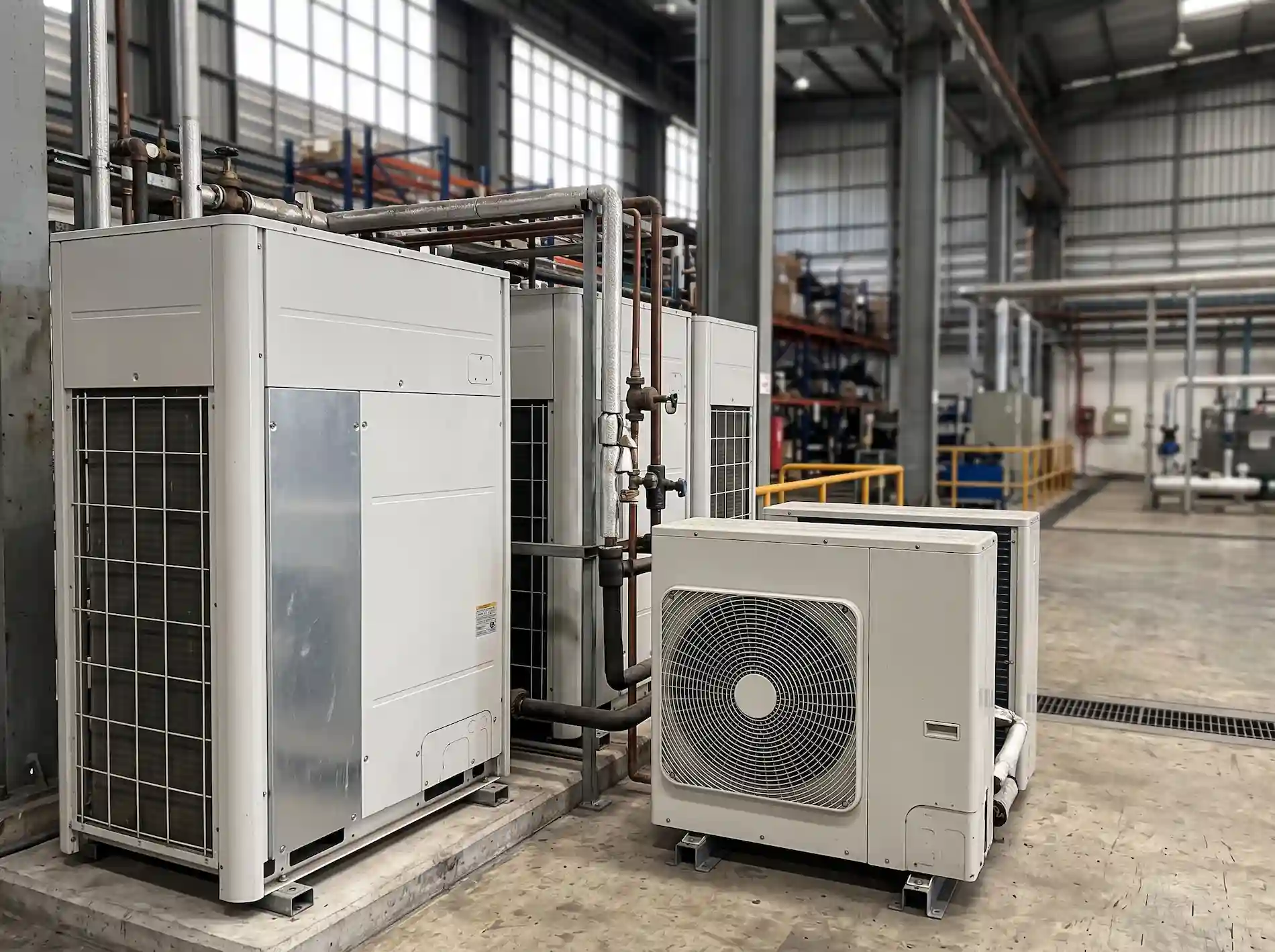
VRV/VRF systems — how it works
The heart of VRV/VRF is adjusting refrigerant flow to match each area's real demand, instead of running at full power all the time like conventional air conditioning.
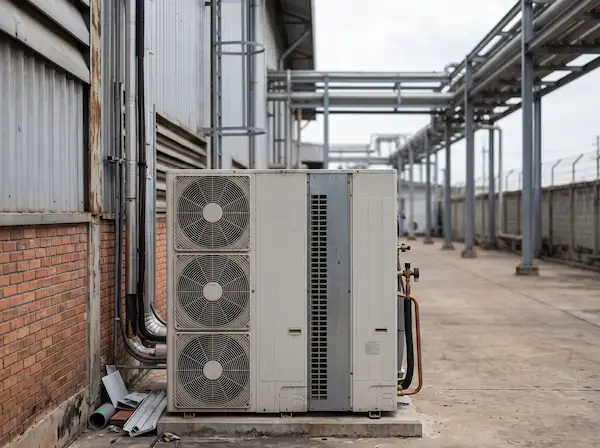
One outdoor unit for multiple indoor units
A single outdoor unit cools many rooms at once, reducing the number of outdoor units to install.
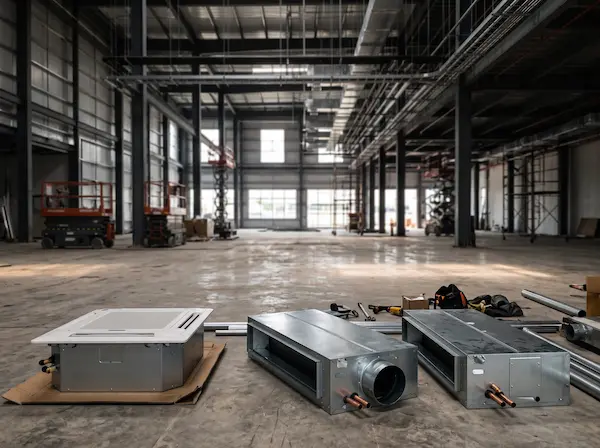
Inverter-driven compressor matches actual load
The compressor adjusts its speed to actual demand. When the heat load is low, such as in the evening and at night, the system immediately uses less energy.
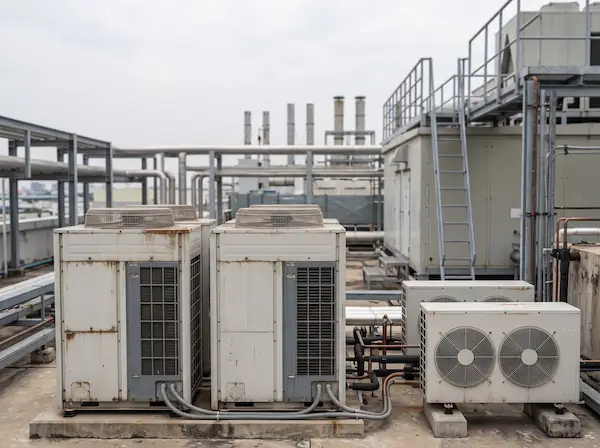
Refrigerant control at each indoor coil
Each room receives exactly the cooling it needs, so temperatures stay steady without waste.
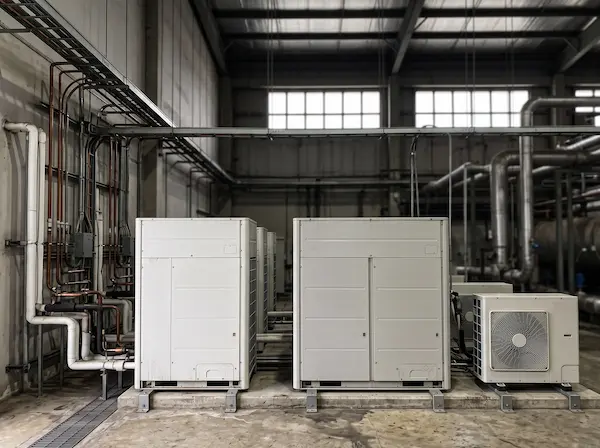
Control at multiple levels
From per-room remotes or wall panels and central control to building management system (BMS) integration via BACnet, LonWorks, Modbus and KNX, and smart control over a computer network.
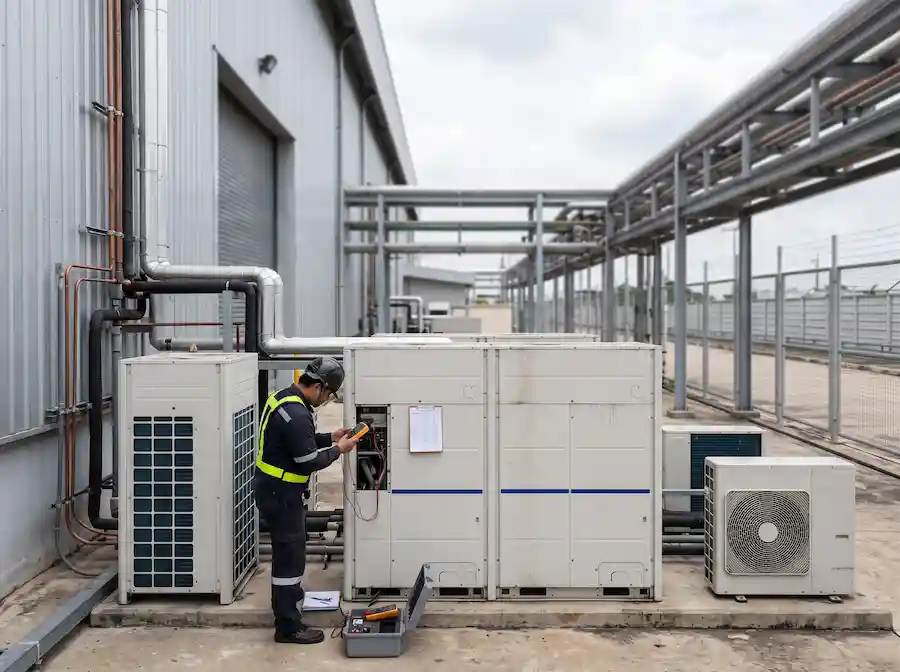
VRV/VRF systems — which buildings is it for?
VRV/VRF suits buildings that run air conditioning for many hours a day, especially sites with many rooms and varying occupancy.
- Office buildings with many rooms and zones that want central air conditioning control.
- Small and mid-sized hotels with varying room occupancy, as the system cools only the rooms in use.
- Buildings that need design flexibility, have limited space for outdoor units or want air conditioning that blends with the interior.
Compare to make the most cost-effective decision
Why choose VRV/VRF with Win Win Supply (ESCO)
A comparison between conventional air conditioning and a VRV/VRF system designed and maintained by our specialists.
Conventional air conditioning
- Less precise temperature control and higher energy use
- Many outdoor units that take up space and clutter the building
- Short refrigerant piping runs and limited installation positions
- Units switched and adjusted one by one, hard to control centrally
VRV/VRF with Win Win Supply (ESCO)
- Save up to 40% on electricity compared with other air conditioning systems
- Precise temperature control with an inverter compressor
- One outdoor unit for many indoor units, saving space
- Long piping runs that fit the building structure
- Per-room or central control, with BMS integration
- A full range of BTU sizes and indoor unit types for every space
- A team of refrigeration and air conditioning specialists, from consultation onward
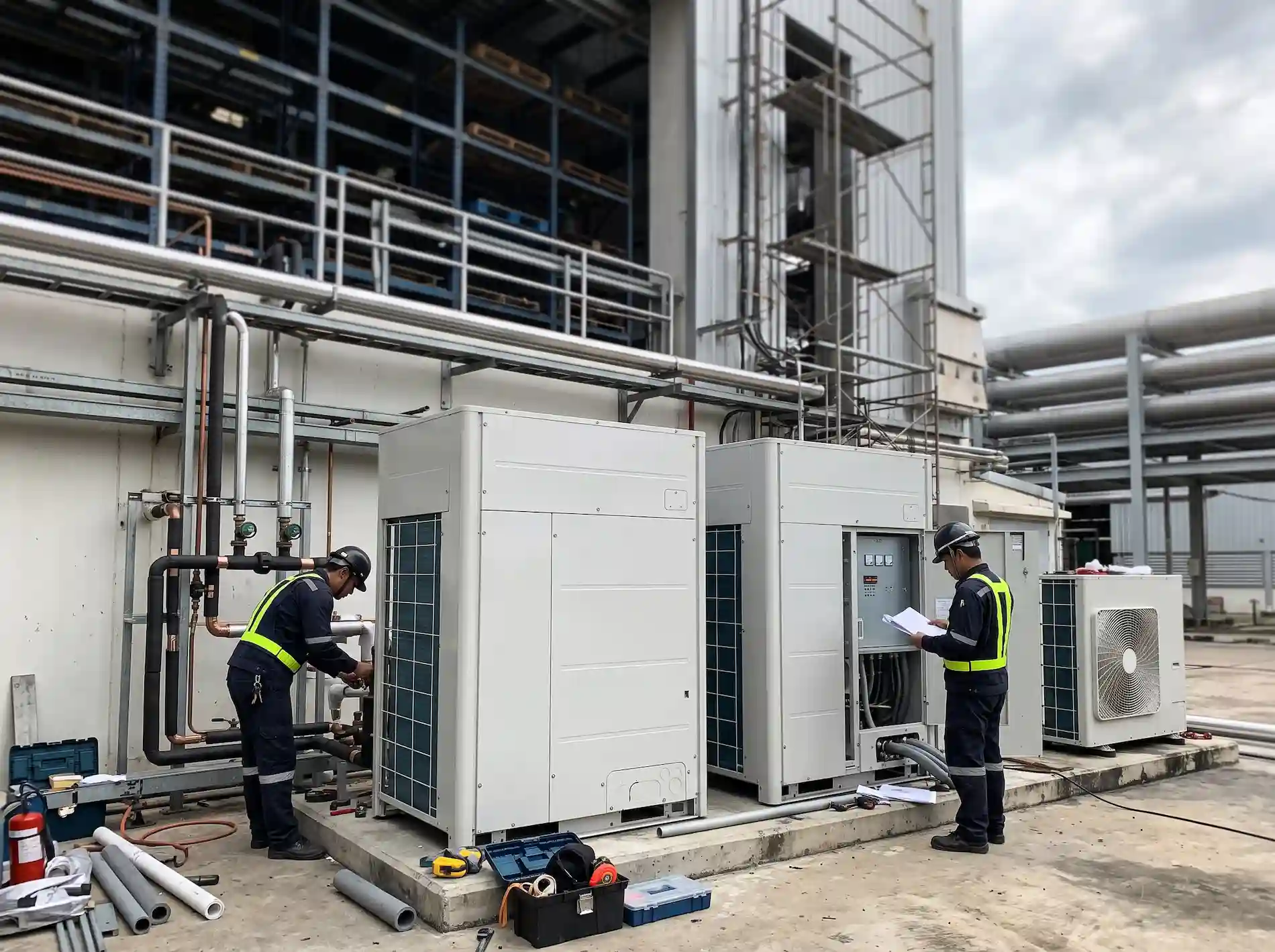
How we install VRV/VRF air conditioning

Consultation
We learn about your building, how it is used and your current air conditioning electricity costs.

Site survey and heat-load assessment
We visit the site to determine the right BTU capacity and find positions for the outdoor units.

System design and equipment selection
We choose indoor unit types and control options to suit each space and your interior design.

Installation and testing
Installed by skilled technicians and tested for maximum efficiency.

Maintenance guidance
We advise on regular care and inspection so the air conditioning runs at full efficiency with less risk of downtime.
Frequently asked questions about VRV/VRF systems
Common questions about our VRV/VRF air conditioning service
1. What is the difference between VRV and VRF?
3. Which buildings is this system suited to?
5. If a unit fails, does it affect the whole building?
2. How much can a VRV/VRF system save?
4. Is installation more expensive than conventional air conditioning?
6. What control options are available?

Ready to cut costs for your business?
Upgrade your air conditioning and save energy long-term
Free expert consultation! We analyze your energy use and design a solution that fits your business.

